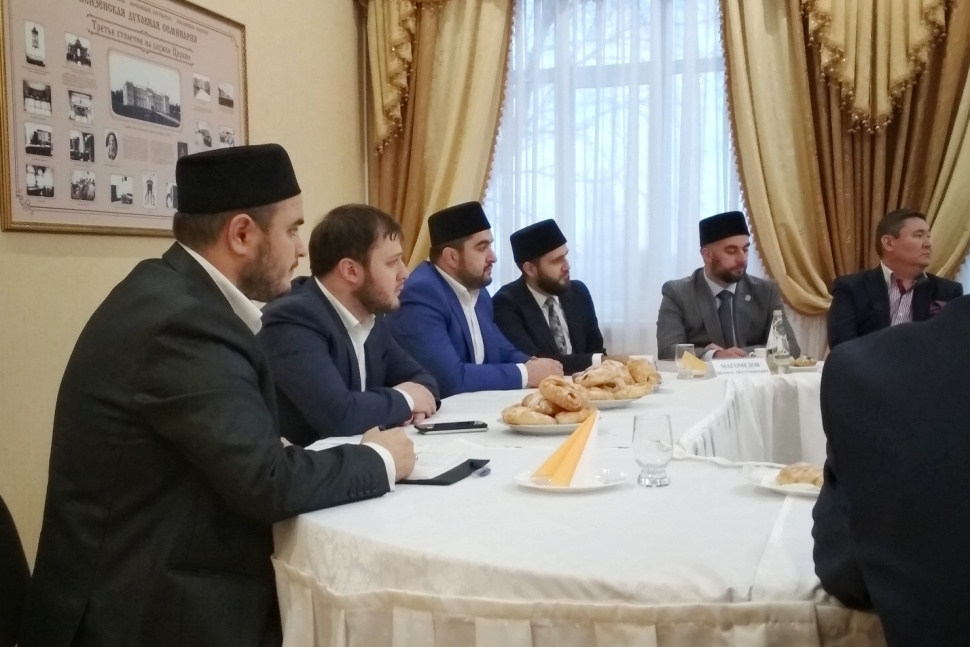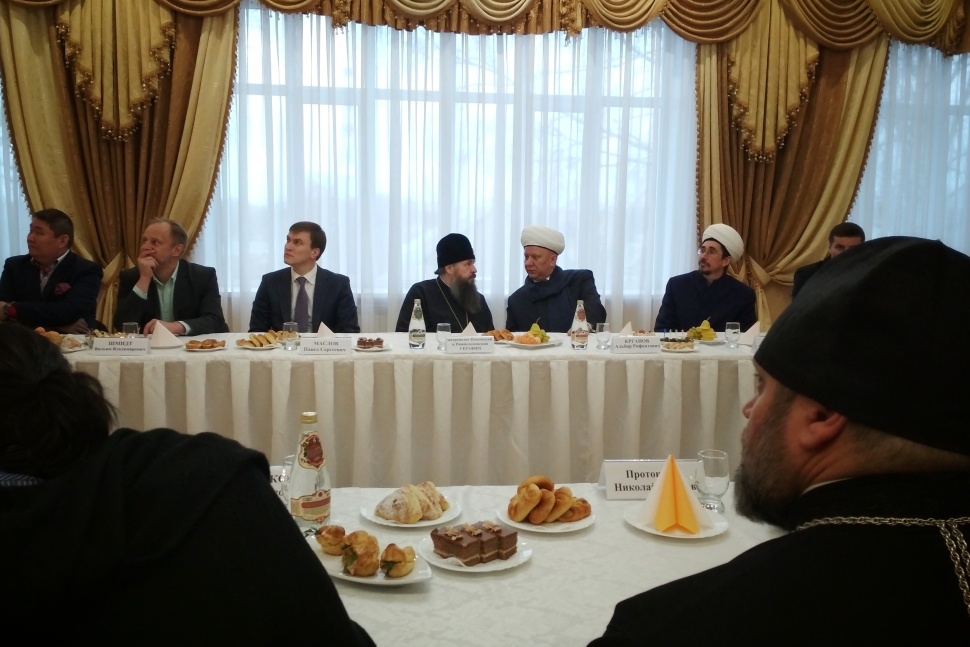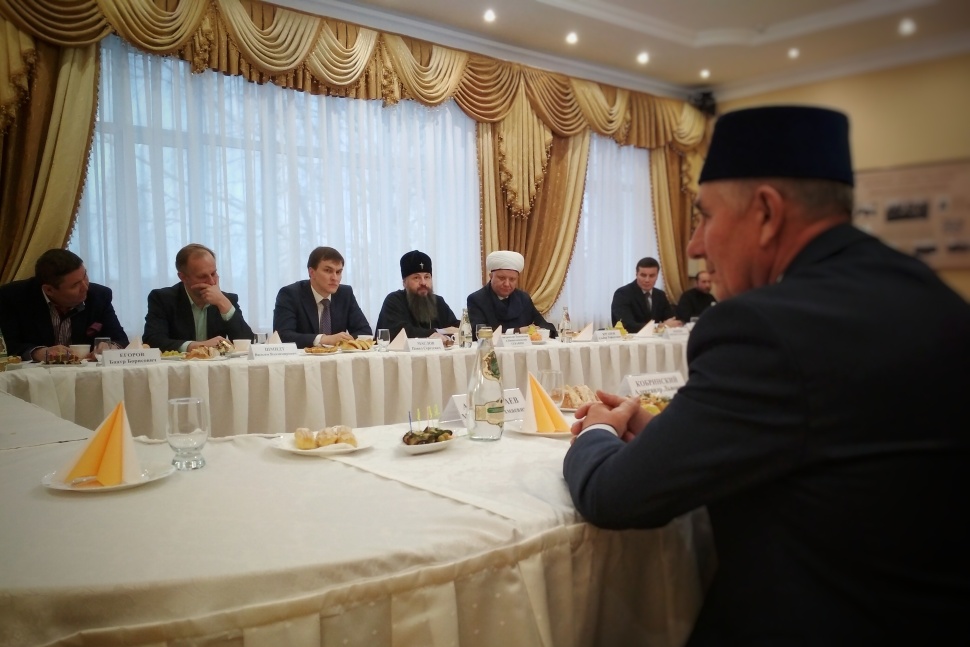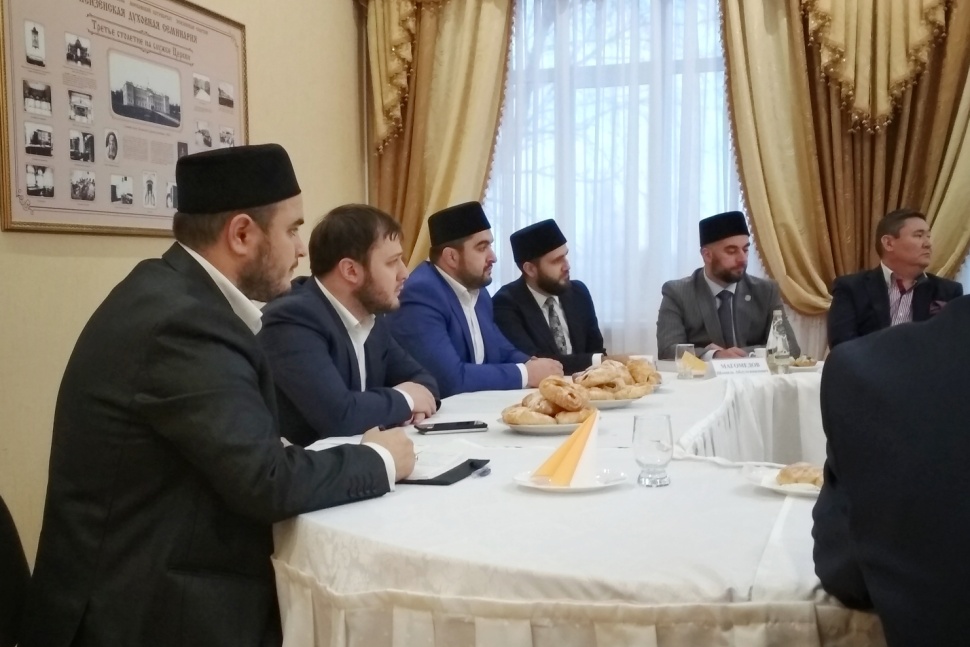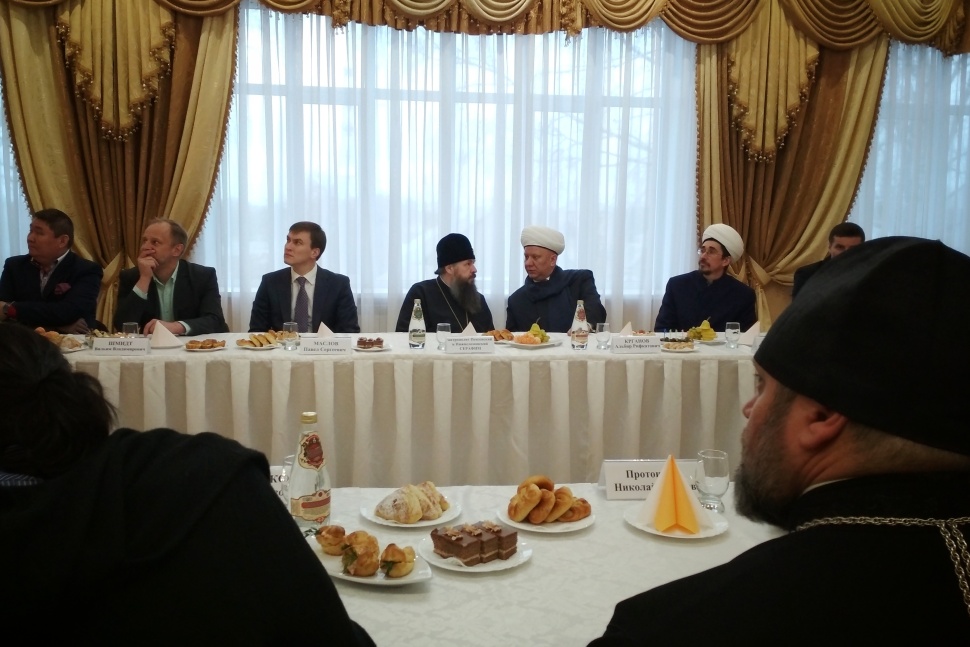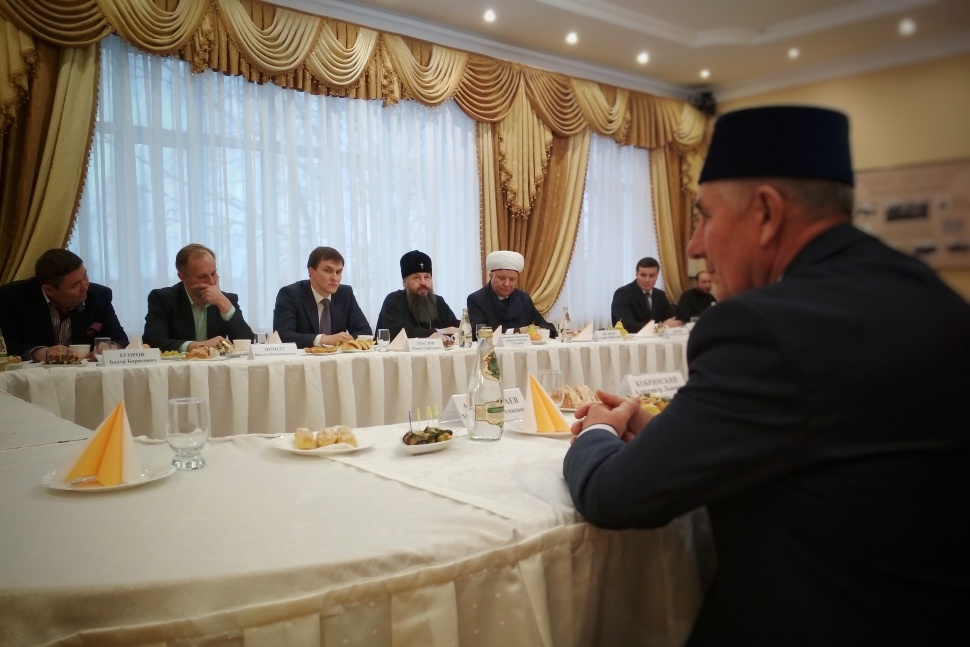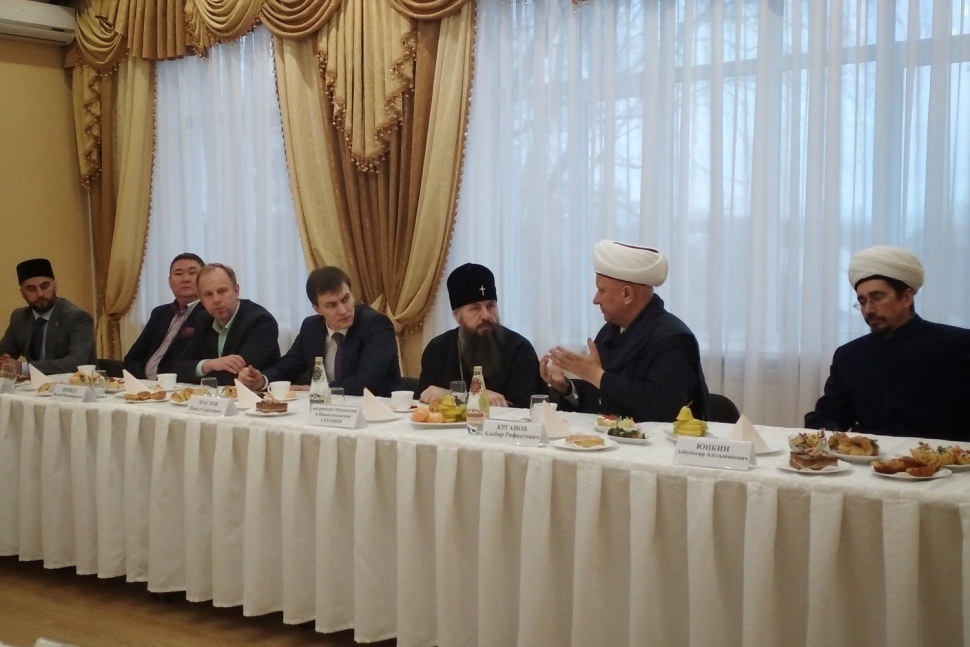
The metropolitan of Penza and Nizhny Lomov Orthodox churches met with the Mufti of the Religious Assembly of the Muslims Albir Krganov in Penza theological seminary on Tuesday, 20th of November.
They met at the round table of the research conference ‘Role of traditional religions in developing harmonious ethnic relations at work and strengthening the unity and friendly relations among the society in modern Russia’.
Apart from the heads of the churches, other Muslim and Orthodox religious leaders and scientists took part in the conference discussions.
In his welcoming speech Metropolitan Serafim called attention to the importance of theological education. He talked about his constant work with seminary students.
‘I see those young people who will one day become my colleagues in this field that we have chosen. I see their strength, will and desire to serve people. Taking care of those who have chosen this path is 90 per cent of success in achieving our goals.
The seminary, as any other religious school, is the centre of intellectual, science and practical work. And I always try to keep the students informed of what is going on in the Diocese,’ shared his thoughts the metropolitan of Penza and Nizhny Lomov Orthodox churches.
‘I am really happy to meet with the leaders of the Muslim community and to discuss our work here,’ he added.
Albir Krganov, in his turn, stresses the importance for student to keep up with the current affairs.
‘I think it is vital to make our students not only knowledgeable in classic theology, but also ready for actual real-life tasks that await them in their future careers. We have eight Islamic universities in Russia and the Bulgarian Islam Academy was opened last year. Yet, this is not enough. We have to work and raise the standard of theological education,’ he said.
The mufti stressed that the current world is always changing and to solve the problems of inter-racial agreement and the development of moral values among the young it is important to work on the system and principles of theological education.
‘Both the Orthodox and the Muslim religious workers have to meet daily with the people of the country we live in. They may ask all kinds of questions –serious theology questions as well as daily-life questions. The religious leader must be able to listen and answer to both types of questions,’ he stressed.
The discussions were preceeded by the the tour of the seminary, where the teachers talked about the history of the educational establishment and the current aims and goals of theological education.
‘We are really surprised, in a very pleasant way, when seeing the work you’re doing. It is vastly important. I hope that we will be continuing our relations, so to say, as neighbours do. We both have to think about those who will come after us and make the future, that is of our students,’ said the Imam Albir Krganov.
He also expressed his hope for further cooperation between the two major religions in Penza in achieving common goals.