


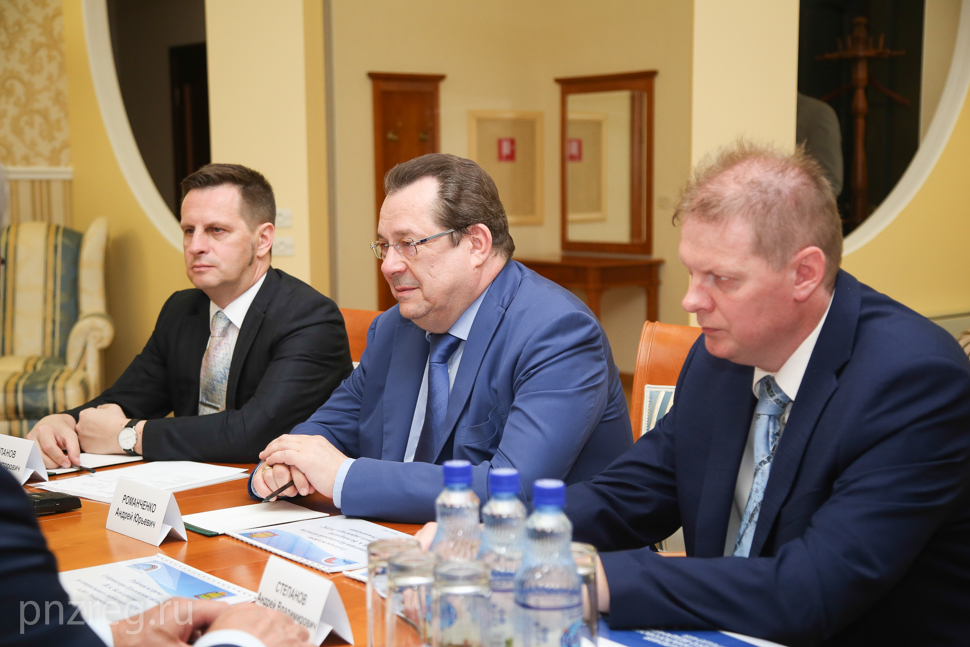
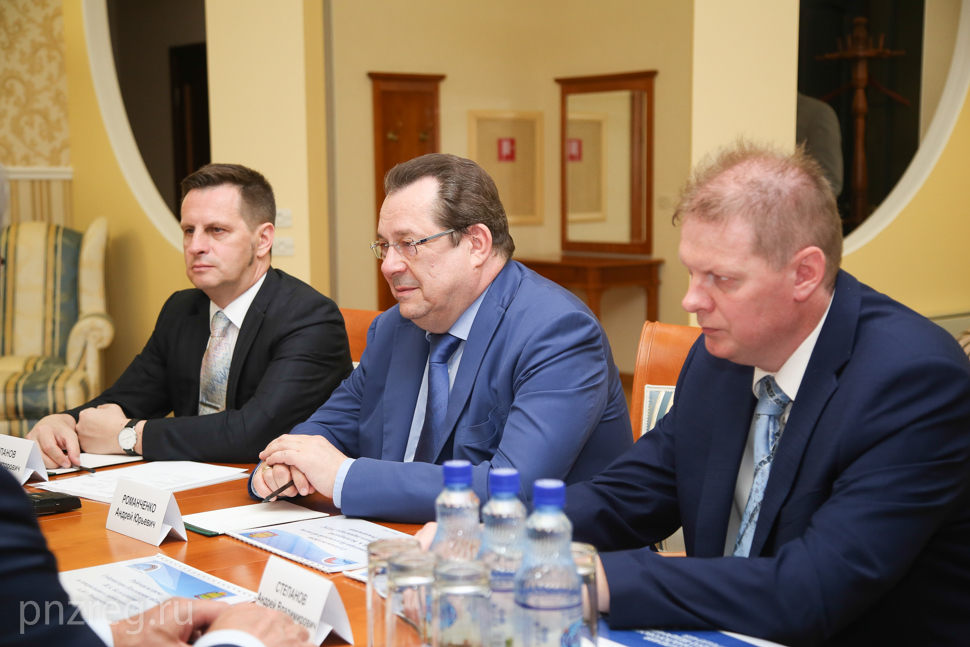
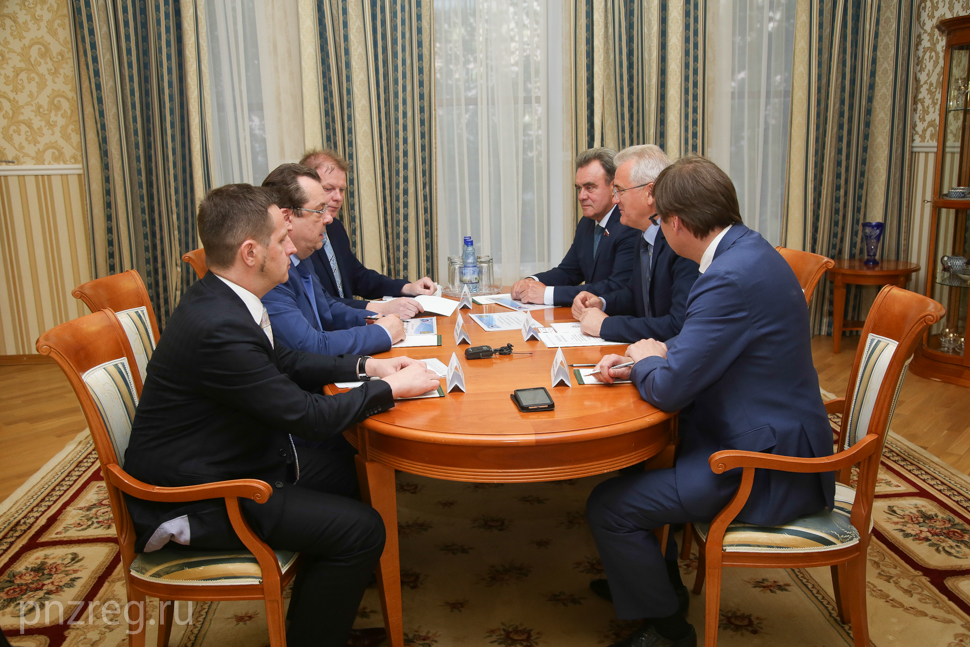
Ivan Belozertsev and Andrey Romanchenko discussed several issues related to the advance of digital broadcasting in the region.
“Thank you for your interest in the Penza region. The launch of digital broadcasting was a significant event. The quality of picture and sound has become completely different and pushed on to the next level.
Previously residents might file complaints, while today there are no complaints at all,” the governor noted at the meeting.
Currently, all inhabitants of the region have access to the first digital multiplex, which includes such channels as Channel One, Russia-1, Match TV, NTV, Petersburg – Channel 5, Russia-K, Russia-24, Carousel, Public Television of Russia, and TV Centre – Moscow. In September 2017, the regional programmes of State Television and Radio Broadcasting Company Penza were included in the channels Russia-1 and Russia-24. The signal transmission is provided by 24 stations of the RTRS-1 network.
“The Penza region ranks among 11 constituent entities of the Russian Federation, where the project scope is 100%,” Andrey Romanchenko stressed.
He also added that the launch of the second multiplex is scheduled for the end of this year. The package of digital TV channels comprises REN TV, SPAS, STS, Domashny, TV-3, Pyatnitsa!, ZVEZDA, MIR, and TNT.
The RTRS-2 network also includes 24 transmitting stations.
“The signal of the second multiplex will be available to all residents of the Penza region in November – December 2018,” RTRS director general reported.
During negotiations, Ivan Belozertsev and Andrey Romanchenko agreed on close cooperation, including raising awareness among people of the changes associated with the shift to digital broadcasting.
A new DVB-T2 television solely requires an UHF antenna to receive digital broadcast TV. In addition to the antenna, an old analogue television needs a digital console.
The Penza region ranks among 11 Russian entities with digital TV broadcasting available to 100% of residents

Sport
17.07.2026
Penza Athlete Wins the European Wrestling Championship
Economy
20.07.2026
Penza Oblast Ranks Among Russia’s Leading Regions in Civilian Dronification
Culture
21.07.2026
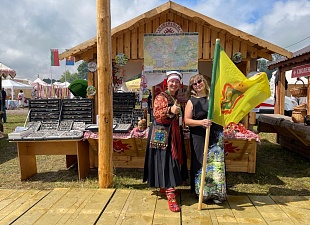
Penza Delegation Took Part in the Kupalye National Festival in Belarus
