Medical scientists and IT specialists of the Penza State University registered two computer programs. Researches train neural networks to diagnose the early development of chronic heart failure (CHF) and determine the authenticity of drugs by examining their tensiometric properties. Innovations will be introduced in practical healthcare. This will reduce the risk of developing cardiovascular diseases among the population and help identify counterfeit medicines.
Scientists have previously received a patent and certificates of registration of a computer program. Penza State University researches work in close cooperation with colleagues from Donetsk Gorky National Medical University (DonNMU).
The certificate of state registration was obtained for a computer program for high-quality express analysis of liquid medicines using neural network modeling of the values of tensiometric indicators of reference and experimental samples.
According to Roszdravnadzor, for 9 months of 2022, the share of Russian made low-quality medicines amounted to 71.9%, and foreign low-quality products amounted to 28.1%.
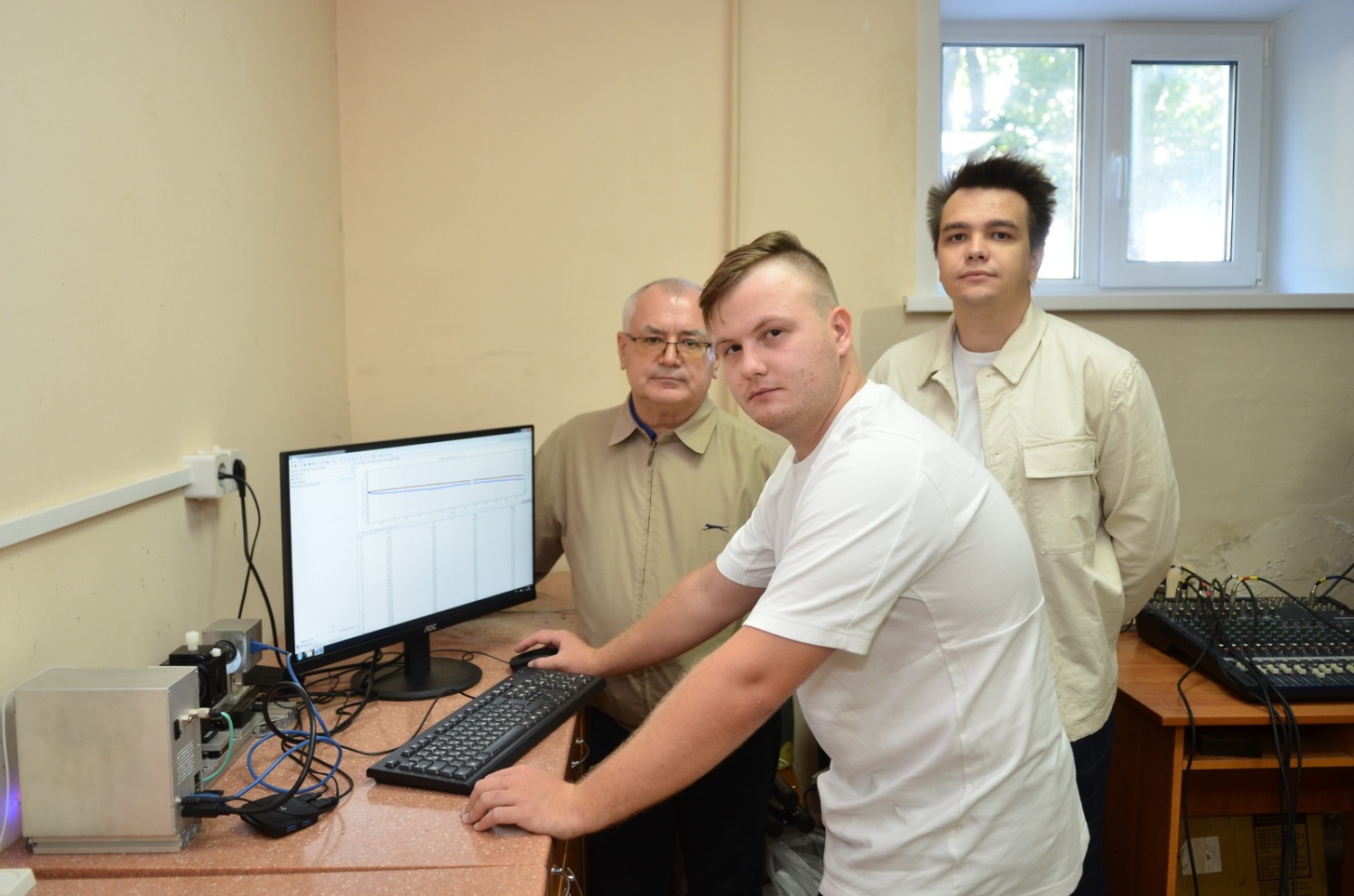
Research team consists of Vladimir Gorbachenko, Doctor of Technical Sciences, Professor, Head of the Department of Computer Technology of PSU; Dmitry Kireyev, 2nd year student of the Medical Institute of PSU; Nikita Zakharov, Master's student of the Department of Computer Technology; Vladimir Potapov, Candidate of Medical Sciences, Assistant of the Department of Anesthesiology; Ilya Miltykh, 6th year student of PSU Medical Institute; Oleg Zenin, MD, Professor of the Department of Human Anatomy at PSU. Researchers studied the tensiometric properties of 10 drugs (albumin 10%, analgin, manitol, gelofuzin, baralgin, drotaverine, ketanov, ketorolac, no-shpa, and ketorol).
The most dangerous violations are falsification and improper storage conditions of the drug before its expiration date.
Currently, there are various methods to determine substandard and expired drugs (infrared spectroscopy, high-performance liquid chromatography, electrochemical methods and others). The problem of applying existing approaches to determining the quality of liquid medicines is the need to use specialized equipment and expensive consumables. PSU scientists have proposed an approach based on the study of the tensiometric properties of liquid drugs with the processing of the results using a neural network.
The study of the tensiometric characteristics of liquid drugs is a continuation of the study of the early diagnosis of chronic heart failure. In March of this year, scientists received a patent for the invention and a certificate of registration of the program in June. They found a unique way to determine the tensiometric properties of the liquid part of the blood (plasma and/or serum) by the "hanging drop" method. This requires no more than 4 ml of blood and 10 minutes.
The point is to investigate the dynamic and equilibrium surface tension of the liquid part of the blood. A drop of plasma and / or serum of the patient's blood is recorded during the time of the study. The device automatically registers how the shape and volume of the drop change. Based on this, the device software automatically calculates the values of tensiometric indicators. These indicators differ in sick and healthy people. Any deviation may indicate the pathology, which means that it allows you to make a diagnosis.
The first version of the neural network allowed for an early diagnosis of CHF with 98% accuracy. Last summer, Dmitry Gribkov, a master's student of the Department of Computer Technology, implemented a neural network for the diagnosis of CHF based on the characteristics of the dynamic surface tension of a blood drop.
The idea to investigate the tensiometric properties of drugs has also proved successful. It is enough to know the indicators of standard samples. This makes it possible to use the values of these indicators as classifying criteria. The whole procedure is the same as when analyzing a drop of blood. A drop of the drug is recorded on camera. The device automatically registers how the shape and volume change. Based on this, the device software automatically calculates the values of tensiometric indicators. It should be noted that PSU scientists were able to refine the neural networks so that it became possible to determine diseases and falsification in 100% of cases.
The research was carried out at the DonNMU Central Research Institute and a specialized PSU laboratory using the RAT 1 hardware and software complex (Sinterface Technologies, Germany). The neural networks are being developed at the Department of Computer Technology.
Drug analysis is a multi-class classification task, for which fully connected neural networks of direct distribution are used.
The research team received a grant from the PSU.
Scientists are ready to offer a method of screening analysis of solutions of medicinal substances and biological fluids, as well as recommendations for a reasonable conclusion about the drug quality violation. The development can be implemented in practical healthcare and in all organizations that specialize in the production and sale of medicines.
The research team plans to apply for the state support program.
Photo provided by the PSU Press Center.
PSU Medical Scientists and IT Specialists Develop Neural Networks to Determine Authenticity of Medicines and Diagnose Early CHF

Society
15.06.2026
Aleksandr Kurenkov Thanks Oleg Melnichenko for Attention to EMERCOM System
Society
16.06.2026
Governor Highly Praised New Baby Food Production Line at Penza Dairy Plant